front page logo

front page logo
John Hilyard Family ca. 1909

Thursday, July 14, 2016

"Hell, Turn Him Loose!": the story of Daniel Boone McIntyre; or, Blogs as Cousin Bait

I got the idea of blogging from a podcast by Lisa Louise Cooke. She has, among others, a series of 45 free podcasts called "Family History: Genealogy Made Easy." It's a great series for beginners and experienced genealogists alike. Specifically, episodes 38-42 discuss how to start a family history blog.

There are lots of reasons to blog. For me, I like to write, and this is a way I can scratch that itch in a life that doesn't allow time for longer projects. I can pick a topic and have a post in an hour or two. I mostly do it for myself, but it's also "cousin bait."

And I finally caught one.

You know who you are. My post on my Civil War ancestor Ansel Wilson reeled you in.

"Cousin bait" means putting your information out online, hoping it will catch the eye of an as yet unknown relative. I'm not sure how many descendants Ansel Wilson has, but with 12 of his 15 children living to adulthood, there's got to be a passel. The information and artifacts of a family don't usually all go to one person. Things get spread out, passed down, forgotten, rediscovered. You have to find the cousins to uncover the cool stuff.

Let's take Ansel Wilson. I started doing genealogy seriously in the 1990s; you know, when you had to write letters. On paper. I honestly can't remember how I came across the name of Hoyt Wilson.  He shared my passion for family history and also loved to tell a good story. Unfortunately, he passed away a few years before I tried to make contact with him. However, I got in touch with his widow.  My mom and I took a trip to Kentucky to meet her and visit the area our family came from. Hoyt had no children, and he directed that his research go to another interested cousin (and with his widow's help, I was able to track that cousin down as well). In the intervening 30 years, I'm sure this sweet lady has passed away too, and I am so glad I got in touch with her and got to meet her.

She shared this photo with me:

Left Bill Wilson, right Hoyt Wilson; taken at Hoyt's home in Beaver Dam, Kentucky

On the left is Bill Wilson, Hoyt Wilson is on the right; they were first cousins. Between them sit the clock, Bible, and knife of their grandfather (my great-great grandfather) Ansel Wilson. The original photo isn't the clearest. I sure wish I could zoom in on those items!

Clock, knife and Bible of Ansel Wilson
I never got to see these items in person. I'm not even sure who owns them now. But at least by getting in touch with Hoyt's family, I got to "see" them.

So, that was the old school way. Write to one cousin, see what they have. Share your stuff. That leads you to the next cousin. It was really exciting to get big packets in the mail with pedigree charts, stories, and pictures.

Now, we've got nearly instant access to people. If we can find them. Enter the blog. 

I wrote my post about Ansel Wilson in 2014. It took a year and a half, but finally a cousin stumbled across it and got in touch. I started dusting off all my old letters and photos to share with her. Meanwhile, she pointed me to her ancestor on FamilySearch.org. He was Ansel's son, John W. Wilson:

John W. Wilson, son of Ansel and Cinderella McInyre Wilson
my great-great uncle
Dark hair, blue eyes, and a moustache that just won't quit!

Now, this man led a full life. You should check out his FamilySearch page to read his short bio under "Life Sketch." You will need to create a free account (and if you haven't already, why not?) to view it. Once on the site, go to the Family Tree menu, click on Find, and you can locate him under the ID number KWZS-TC9. This was my first experience seeing what personal info was on Family Search. I'd only looked at it to view records before.  Now I have a photo and bio of my great-great uncle.

In digging out my files for this cousin, I ran across a letter that Hoyt Wilson had written to yet another cousin, packed with old stories. I know I read this letter 25 years ago, but it had totally slipped my mind.  In it was a story about Daniel Boone McIntyre. He was Ansel's brother-in-law (his wife Cinderella's brother). I'd been able to find "Boone" as he was usually called in census records up to 1880, but that was about it. I'd always kind of wondered about him, but he didn't seem to have a family of his own to trace down so I let it go. I'd like to let Hoyt tell you the story that he set down on paper in 1983, in his own words, with an honest-to-goodness TYPEWRITER, errors and all. [I have inserted a few paragraph breaks to make it easier to read.]

"Mel, I can't seem to bring this letter to a close, as some three incidents that really did happen during the Civil War--incidents that are true--that I should like to tell you about. These true Civil War episodes may not be of interest to you, but they have always meant a lot to me. The first incident has to do with our grandmother Wilson's brother, Boone McIntyre--an own uncle to your father and my father. I believe I mentioned this particular incident to your sister, Beth, in one of my letters a few years ago. But I want to tell the same story to you, probably, with a bit more detail than I set forth in my letter to Beth. 
"Boone McIntyre, (Uncle Boone, shall we call him), was a foreman in a sugar refinery in Louisiana at the outbreak of the Civil War. As the war wore on--men were beginning to be needed to replenish the ranks of the Confederate Army. Consequently, Uncle Boone, was drafted into the Confederate Army, much to his dislike and patriotic belief. So, in due course of time, and at the right opportune moment, Uncle Boone took leave from the Confederates (deserted, so to speak), and traveling more-or-less incognito--made his way back to grandmother Wilson's little cabin on that old flat rock on the bank of Caney Creek at Olaton, Kentucky. Finally, the Confederates noticed that he was missing from the ranks--and knowing that he was from Kentucky, decided that he had gone A.W.O.L. A Confederate Captain with three men under his authority, were ordered to make the trip to Kentucky, in an attempt to locate and apprehend Uncle Boone, and return him back to Louisiana to be tried before a Military Court.  
"The Confederate Captain and his men through some means of direction--and, in due course of time, made their way to Olaton, Kentucky, (probably, with some help from the Confederate Intelligence in Ohio County), converged on grandmother Wilson's humble little cabin on that old flat rock on the banks of Caney. It was near the close of the day, and "darkness was beginning to set in--grandmother said, and the Confederates made their way into the house--showing some degree of politeness". They made no attempt to molest or harm grandmother in any possible way, but did demand that she cook their supper. If you remember when you were here--the old Dutch oven or skillet that we now have in our kitchen, is the very Dutch skillet in which grandmother Wilson prepared the supper for these Confederate soldiers. I can remember my dad telling me just what she cooked for these men for supper. Fried corn pone, fried potatoes, fried side meat, and eggs.
"While grandmother was preparing their supper, the Confederate Captain picked little Billie (William E. Wilson, our fathers' brother), up and was trotting Billie on his knee. No doubt the Captain was also a family man. Little Billie was approximately two and a half years old, and could do some bit of talking. Now, what happened here was, at which time Uncle Boone arrived at grandmother's house--they took his Confederate uniform--pulled a board loose from the floor, and hid his uniform under the floor. They also put some bed clothes and few other fairly valuable items up in the old loft or attic above the main living floor. But grandmother, and Uncle Boone, when they were concealing the uniform and bed clothes had not the least idea that Little Billie was observing just what was going on. So, consequently, while the Captain was trotting little Billie on his knee--Billie suddenly had a real bright thought. Gesturing his little thumb--down toward the floor--Billie said, "soldier clothes down there", and with his thumb pointing upward toward the loft, "bed clothes up there". 
"Grandmother said "that her heart nearly came right up in her throat.  She was scared almost to death. One of the Confederate soldiers jumped up--whipped out his pistol, and said to the Captain, "did you hear what the kid said?" The Captain assured him that he did, and told the soldier to put his pistol away. But the soldier, perhaps, thought that their pray--Uncle Boone--might be just outside the door, and could come in shooting. So, quite a little scuffle went on between the Captain and his subordinate--causing the pistol to discharge and the bullet imbedded in the old mantle above the fire place. Grandmother, then, was really scared.
"The Captain finally quieted the man down, and they then proceeded to have their supper. After they had eaten--they began to explore. Lifting up the board in the floor, they, of course, found Uncle Boone's Confederate uniform. The Captain quizzed grandmother as to where Uncle Boone might be found. She replied "that she had not the least idea as to his whereabouts". The Captain knew, of course, that they were on the right trail, and reasoned that Uncle Boone surely was not too far away. So, bright and early the next morning, the Confederates started making a fairly wide circling sweep of the countryside. Uncle Tom Daniel (Capt. Tom), our father's half Uncle was hiding Uncle Boone out at his house. Uncle Boone was staying in a cave down under the hill from Uncle Tom's house. 
"It was in the summer time, and tobacco crops were up about waist high. Uncle Boone was helping Uncle Tom to work his tobacco patch. The Confederates suddenly surprised both Uncle Tom and Uncle Boone by seeing them in the tobacco patch. Uncle Tom saw the Confederates first and told Uncle Boone to make a run for the cave. Uncle Boone started running through the tobacco--whereupon, the Confederates opened fire with their rifles, and cut down several tobacco plants all around Uncle Boone as he ran for the cave. The Confederates rushed in quickly, and captured Uncle Boone hiding in the cave below the house. 
"Uncle Boone was taken back to Louisiana--where he was tried before a Confederate Military Court, and was sentenced to be executed for desertion. The Captain, and his three firing squad men, took Uncle Boone out to the designated spot of execution--whereupon the Captain, "asked Uncle Boone if there was any last minute request--or anything he would like to say before his execution?" Somehow, through all this ordeal, Uncle Boone had managed to conceal on his person--an old "tintype" picture of a woman and two relatively small children. I am led to believe that this picture of the woman and two children was that, of some of the McIntyre family from way back. Of course, Uncle Boone had never been married. He was strictly an old bachelor. Anyway, Uncle Boone produced this picture--handed it to the Captain, and said, "This is a picture of my wife and two children--back in Kentucky whom I haven't seen for over two years. I just want to ask this favor of you, Captain, to promise me that you will have this picture returned back to my wife with the message that she and the children were the last thoughts on my mind." The Captain took the picture--"Uncle Boone said". And studied it intensely for quite a long time. He pushed his hat back, scratched his head momentarily, handed the picture back to Uncle Boone--then turned to his firing squad, and said, "Hell! Turn him loose. He's human just like the rest of us." 
"So, I guess there's a little soft spot in the hearts of many men. Uncle Boone was convinced to the day of his death, that this picture was the only thing that saved him from the firing squad. After his release by the Captain, Uncle Boone faded away into the countryside, and eventually with some degree of caution, made his way back to Olaton, Kentucky, where he weathered out the rest of the war with grandmother Wilson--there in her little cabin on that old flat rock on the banks of Caney. Now, wasn't that quite a twist? After the Confederates went to all that trouble making their way to Kentucky to apprehend Uncle Boone, taking him back to Louisiana to be executed, and with that little spark of love in the Captain's heart for a human being, turned him loose. I have often wondered just what kind of a report the Captain, and his firing squad made to their ranking superiors. Probably, faked some kind of a report, or turned in a signed document indicating that the execution had been carried out according to orders." 

This letter was dated February 7, 1983, and signed "Your old Kentucky Cousin, Hoyt".

This letter got me digging around trying to verify any parts of it. I was able to find Daniel B. McEntire, age 26, in the 1st Louisiana Cavalry. He was reported as "home sick" in the summer of 1862, having left his unit at Russellville, Kentucky. This is when "Little Billie" would have been 2 1/2. It could be him, but he laters appears as "present" on the muster rolls from the fall of 1862 to July 1863. Then oddly, he doesn't have any other muster roll cards until a Roll of Prisoners of War, surrended to the North on May 26, 1865 and paroled on June 4, 1865. I'm not sure this is the right Uncle Boone, but it kind of fits.

Boone McIntyre was living with his mother in the 1870 census in Kentucky. In 1880 he is listed as a laborer in a household of, as far as I know, unrelated people, still in Kentucky. That's the last I can find of him.

I shared this letter with my new cousin, and was rewarded with one more bit of memorabilia.  I present to you the Dutch skillet that Cinderella McIntyre Wilson prepared dinner in to served the four Confederates in her cabin that hot summer night.


And along with that, a much better version of the picture I have of Cinderella:
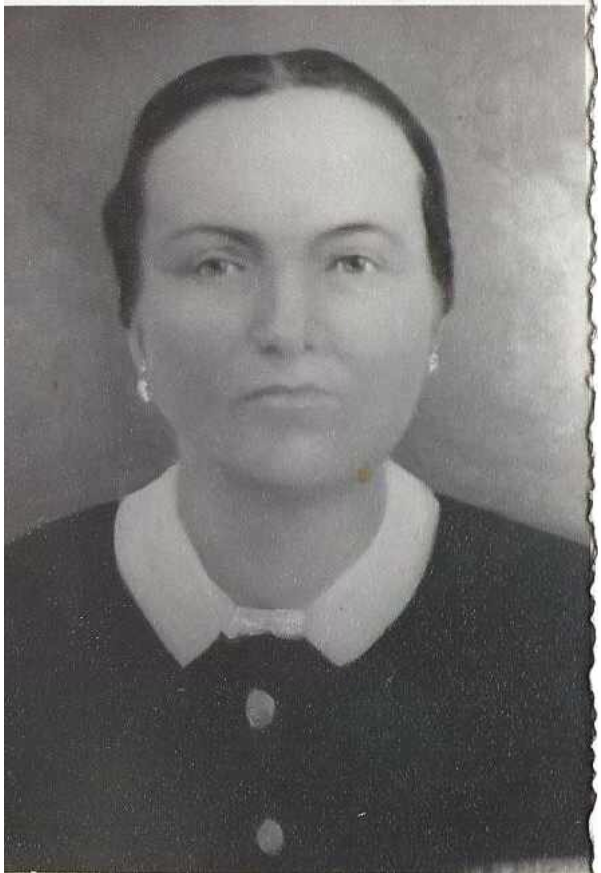

I love the little earrings. I wasn't able to see those in my copy. This story makes it a little easier to imagine Cinderella in her little cabin by the creek, with (at that time) three small children. Her husband was away fighting for the Union, but she lived in a state where Union and Confederate both flourished.  I can see her cooking in that pot trying to keep her cool with four soldiers looking for her brother.

I can't wait to see what cousin I hook next!


Wednesday, July 6, 2016

Details of Thomas Hilyard's Revolutionary War Service

In my last post, I explained how I discovered that my 5th great-grandfather Thomas Hilyard served during the Revolutionary War in the Pennsylvania militia. Today, I'm going to give all the details and documents I have to support this. (Hint: this one might be a bit dry. Try pretending you're on Genealogy Roadshow.)

I first found a reference to Mary Hilyard in the "Journal of the Forty-Eighth House of Representatives of the Commonwealth of Pennsylvania" available online at Google Books. This is a snippet of the page:
Mary Hilyard seeks pension, above book page 40
My cousin Deidre and I traveled to the Pennsylvania Archives in Harrisburg, Pennsylvania over Spring Break 2016. Although the referenced "documents" do not exist, the "petition" referred to does. We were allowed to view this.

This is the box containing Mary Hilyard's petition for pension with identifying information
And the petition itself:
Page 1 of Petition

Page 2 of Petition

Outside of Petition
We already had all of the text of this document, but it was neat to handle the real thing.

Next, we wanted to see the originals of the ledgers recording what Mary Hilyard received as her pension.  Those were located on microfilm on these two rolls:
Mary Hilyard pension ledger microfilm side view
Mary Hilyard pension ledger microfilm top view
And the ledger images themselves:
Ledger entry for "Mary Hilard" from 1839-1845, screenshot of microfilmed image
There are two other entries:
Ledger entry for "Mary Hillard" from October 1839
Ledger entry for "Mary Hilard" for 1846-1847, the year she died
Again, no new info for us here, but we just had to see it for ourselves.

Finally, on to the uncharted territory. We had the index card showing "Thomas Hillert" served in the Revolutionary War:
Index cards for Pennsylvania soldiers available free online
Using the information on this card, the excellent librarians at the Pennsylvania Archives helped us navigate finding aids. Battalion numbers changed over time, adding to the confusion. This card indicates "N.D." which means the list he is found on is undated.  It is found on a roll containing the years 1777-1780.
Microfilm box source information for next two images
Full page of Pennsylvania 8th Batallion Captain Frederick Ziegler's Company, 1st Class, including "Thomas Hillert"
Close-up of Thomas Hillert's name

The next film:
Microfilm box source for next five images
This is the "Return of Jacob Brands Company, Militia Captain of the Lower part of Manor Township, in the County of Lancaster, and State of Pensylvania, May the first 1781 with names and sirnames as follows:"
Militia roll Lower Manor Township, Lancaster County, Pennsylvania 1 May 1781
4th Battalion 2nd Company 1st Class

Close-up of previous image showing Thomas Hilliart

The roll for the following year, 1782: "A True and exact List of the names of each and every Male white person, Inhabiting or Residing, within my District, in the Second Company, of the fourth Battalion of Lancaster County, Militia, between the Age of Eighteen, and Fifty-three Years. Taken for the Year 1782."
Militia roll Lancaster County, Pennsylvania 1782
4th Battalion 2nd Company 1st Class
Right-hand edge of the above image

Close-up of First Class showing Thomas Hyliard
This seems to be the last year (1782) that Thomas served on the Lancaster County militia. The following documents show him listed as not attending from 1783-1785.

Microfilm box source for next six images
"A Return of the none attendents of the Seventh Company and Ninth Battalion of Lancaster County Millitia commanded by Col. Fredrick Zigler for the Year 1783". Note that Md stands for Muster Day and Fd stands for Field Day.

Roll of "none attendents" of 7th Company 9th Battalion Lancaster County, Pennsylvania militia 1783

Close-up of previous image showing Thomas Hillgert
Next we have "A True and Exact List of the Names of Each and Every male white person inhabiting within my District in the Seventh Company of the Ninth Battalion of Lancaster County, Millitians, who refused to attent the Mustering place, and being being between the Age of Eighteen and fifty three years, Taken for the year 1784"

Roll of men who refused to attend mustering Lancaster County, Pennsylvania Militia 1784

Close-up of previous image showing Thomas Hylliard
The final list appears to have been made in the Spring of 1784, the same year as the previous one, but it was attested the following year on 12 May 1785. It is "A Return of the none Attendens of the Seventh Company in the Ninth Battalion of Lancaster County Millitia Commanded by Colonel Frederick Ziegler in order of Sevarel of Classes as follows."

Roll of none attendants Lancaster County, Pennsylvania 1784-1785

Close-up of previous image showing Thomas Hyliard
These are all of the documents I have been able to find regarding the Revolutionary War service of Thomas Hilyard, who served in the Lancaster County, Pennsylvania Militia. In my next post I hope to share some of the activities of this militia.

Friday, July 1, 2016

Just Ask Google; or, How I Discovered Thomas Hilyard Served During the American Revolution

When I got back into genealogy in late 2014, I was astounded at the amount of records that had gone online during my hiatus. Sure, all the subscription sites are great, but not one of them told me that Thomas Hilyard had fought in the Revolution.

You know who knew about his service? Google.

I am convinced that Google knows darn near everything, short of a few maiden names I'm missing, if I just ask it the right questions.

At this point, I would ask you to read (or re-read to refresh your memory) my post from November 2014 so that the rest of this makes sense.

Go now. I'll wait.

Now we can proceed. So I left that hanging, and never did the follow-up post. Long story short, I'm glad I didn't book a plane ticket to the Pennsylvania Archives, at least solely for that reference. Short story long, I put up a request for someone going to the Archives to look up these references to Mary Hilyard's pension for me. A wonderful lady obliged, and within a few weeks she emailed me the images. Drumroll please....
Pension ledger entry for Mary Hilyard
Yes, I was a bit underwhelmed too. There were some other images, but all basically with the same information. Nothing about Thomas or his service. I had to put this project on the back burner for a bit.

Fast forward to Spring Break 2016. I took a trip with a cousin to Pennsylvania (and other places) to look into the Hilyards. We spent one day at the Pennsylvania Archives in Harrisburg. The librarians there are top-notch, very knowledgeable and ready to help.

Our first goal was to find the petition and papers that Mary Hilyard filed with the State House of Representatives proving her right to a pension. That would have been the mother lode. It would have had proof of marriage (including her unknown maiden name), description of Thomas the Elder's service, and who knows what else. I knew that such records existed at the federal level; I'd found something similar on another person. But no matter how much we begged and pleaded, the librarians held firm that records such as these simply were not preserved. We finally relented and moved on.

We knew that Thomas did serve, so how could we find out when and where? The super librarians asked if I had checked their website's index of Revolutionary War service cards. I actually had, but didn't know if I had the right person.  This is what I had copied:
Revolutionary War Military Abstract Card for Thomas Hillert
from the Pennsylvania Archives ARIAS website

Thomas Hillert? I've seen the name spelled every possible way. In this time frame Hilgert was common. Hillert just didn't feel right. But, it was Lancaster County, and I know Thomas Hilyard had spent at least a few years in that area.

The excellent librarians explained how we could look at the original records that had generated these index cards on microfilm. We paged through lots of old handwriting until we found this:
Lancaster County, Pennsylvania Militia Rolls 1777-1780 8th Batallion
Click image to enlarge

And the pertinent section here:
Thomas Hillert listed in Capt. Ziegler's Company, 8th Batallion 1st Class
Click image to enlarge
We went on to find Thomas in every roll we could. He appears consistently from the above (undated but around 1777) roster through 1785, at which time he moved across the state. I was finally convinced we had the right man through the various spellings of Hilyard, combined with the fact that a man associated closely with him, Conrad Hillegas, was in that same battalion. 

In reading about the Pennsylvania militia structure, it was confusing to say the least. If you would like a fairly concise explanation, I recommend the Pennsylvania Archives version.  If you are a military historian or glutton for punishment, dig into this article on the Journal of the American Revolution's website.

The highlights are these:
  • all white men between the ages of 18 and 53 capable of bearing arms were required to serve two months of milita duty on a rotating basis
  • militia might be used to support the Continental troops
  • some militia performed frontier duty, reinforcing the outlying Pennsylvania counties
  • others performed guard duty at supply depots and prisoner of war camps
As far as I can tell, Thomas Hilyard has not been submitted to the Daughters of the American Revolution as a patriot. I think I will make this a goal of mine, to get him qualified and see if I can join up.

Wednesday, June 29, 2016

My Family in the Civil War, Part Sixteen: Aftermath

This is the sixteenth in a series on my Civil War ancestors

In these last few posts, I've looked at what effect the Civil War had on just one couple in my family tree. Edward Windsor Moore and Susannah Bryant Moore sent four sons to war. Two died in service, one of disease contracted while serving, and the fourth continued on in the military and moved hundreds of miles away.  The death of their youngest son, Bartlett Cofin Moore, whom they depended on to care for them as they aged, affected the course of the rest of their lives.

Graves of Edward and Susannah Moore from findagrave.com

The Moores had seven sons in total. Two died as children. Bartlett died in the war before having a family of his own. My ancestor, William Bryant Moore, died at age 20 having fathered only one child. This line of Moores comes down to one surviving male, my uncle Bill, who has no children.

Of the other Moore boys, I can trace down to only one other male line. Edward Windsor Moore Jr., who died at the battle of Vicksburg, had a son by the same name. The last record I can find of him is when he received his inheritance from his grandfather Edward Moore's estate in 1890. I have been able to trace no further and do not know if he married and had children.  If he didn't, the Moore line coming down from Edward and Susannah is extinct.

Of course, Edward and Susannah's daughters and granddaughters married and produced many descendants. But the war took its toll on them as well. Six sons-in-law served in the Civil War; one, William Smith Hawhee, died after being wounded at Stone River.  The other five survived: Isaac Newton Breeden, Richard A. Spaulding, Enoch E. Inman, Leonidas Ross Grigsby, and Trusten B. Wilson.

Edward and Susannah lost one grandson that I know of in the war, Edward Windsor Breeden. He contracted measles and died after his return from fighting.

I also traced several nephews of Edward and Susannah Moore affected by the war. Four men died: John A. Moore, Joseph H. Moore, Thomas Tillery, and Thomas Coulter Moore. Two others fought and returned home: Solomon Moore and William Davis Moore.

I'm sure there is more to be uncovered about this family, but I'll end my report on them here. It is reported on the Civil War Trust website that 620,000 men died in the Civil War. Until the Vietnam War, that was more than the number of men lost in all other wars combined. Even now, the total of all other wars stands at about 644,000.  If your family lived in America during the Civil War, it most certainly affected them in some way. Find out how and tell their stories.

Sunday, June 26, 2016

My Family in the Civil War, Part Fifteen: "In view of the great age of the parents, I suggest special action."

This is the fifteenth in a series on my Civil War ancestors

Susannah Moore filed her original claim for a dependent mother's pension in 1880. Nearly four years later, this initial claim was denied on the grounds that her husband owned sufficient property to support her. It was referred for special examination.

On March 9, 1885, special examiner V. H. Whitman began looking into the matter, visiting Orleans, Indiana to meet with all the deponents in the case. By March 25th, Mr. Whitman had collected all he needed and sat down to write his report. And write he did. It took him 20 handwritten pages to summarize the case.  He concluded his report with this paragraph:

Conclusion of Special Examiner in Case of Susannah Moore
"I am of the opinion that the claim is a meritorious one and I recommend its admission. In view of the great age of the parents I suggest special action.
                                                                                       Repectfully
                                                                                       V. H. Whitman
                                                                                       Special Examiner"

Mr. Whitman must have pushed the right buttons.  Less than one month from the writing of this letter,  April 23rd, 1885, a certificate was issued to Susannah Moore, granting her a pension in the amount of $8 per month, commencing March 28th, 1865. 
Pension folder sleeve for Susannah Moore's papers
The file does not specifically state it, but I believe she must have been paid in arrears for the prior 20 years. Eight dollars a month for 12 months, times 20 years, yields $1,920. I certainly hope it was the case that she received a check for this amount. 

Her husband Edward Moore passed away one year later, on August 15th, 1886. Susannah continued to receive the $8 per month until her death nearly six years later, on March 12, 1891.

My final post on this family will discuss the far-reaching web of effects the Civil War had on the Moores.

Saturday, June 25, 2016

My Family in the Civil War, Part Fourteen: "The Infirmity of Age is Upon Him, Yet a Well Preserved Man"

This is the fourteenth in a series on my Civil War ancestors

As part of the requirements to qualify for a mother's pension, Susannah Moore had to show she had no means of support other than what her deceased son Bartlett would have given her. She had already answered questions about her other children, but it had to be shown that her husband was unable to properly provide for her.

To prove this, no less than 13 people testified about Edward Moore's health. The testimonies paint a vivid picture of Edward in his later years, one I would never have gotten otherwise.

The most medically descriptive is, of course, the official surgeon's examination. This was performed by Dr. John A. Ritter. Dr. Ritter had served in the Indiana 49th in Company G, the same unit as Edward's sons, Edward Jr., Christopher, and Bartlett, and two of his daughters' husbands, Isaac Breeden and Richard Spaulding. He was most likely the one who treated these men for illness and wounds while in service.
Dr. John A. Ritter
Photo contributed to the Slices of Orange County Facebook group
by Gerald W. Ritter


Dr. Ritter's examination took place on May 1, 1883. Dr. Ritter was in his early 60s by then. He writes:
"I find chronic inflammation of each leg extending from the feet two thirds to the knee, dark, livid, indurated ulceration with scabs. He says legs become often denuded so he is confined to his room five or six weeks at a time. Occupation farmer. Says he has not been able to plow for 20 years, this inflammation has been on him 35 or 40 years. He is 79 years old. The infirmity of age is upon him, yet a well preserved man of his age. Have known him 30 or 35 years but was not aware of his condition as regards his disability in the legs. He also has palpitations of the heart. A man of good habbits [sic]."
Punctuation added for clarity.

Twelve other people described Edward's physical condition as they saw it.

  • Susannah Moore: "varicose veins"
  • Leonidas R. Grigsby: "sore legs", "swollen, purple"
  • Harrison Morgan: "trouble walking, pain in his neck", "couldn't stoop or plow"
  • Elizabeth Wilson: "something like colic", "trouble with legs"
  • Bennet Grigsby: "frequent attacks of bilious colic", "complained of legs"
  • Mary Grigsby: "legs have troubled him"
  • Peter Newton: "he could knock about and do some light work but couldn't do a hard days work at all"
  • Hance Wilson: "complained of his legs"
  • William D. Moore: "his general health was tolerable good, but he had a bad leg (right one I think), it presented a very dark swollen appearance and he walked lame"
  • Columbus Brown: "sore legs", "heart trouble", "leg swells up, very dark colored and some sores on it"
  • Jeruel Leonard: "some disease in one of his legs"
  • Richard Lingle, M.D. (Edward's physician):  "stomach trouble, heart and kidney disease, and bronchial trouble. Varicose ulcers on one leg, I think the right"
Dr. Richard Lingle stated he had been Edward Moore's doctor since July 1878, and had visited him 75 times (by March of 1885). That works out to almost once a month. He noted that Edward only owed him for one visit and two prescriptions, that he had been treating him this month.

When Bartlett Moore died, his father was 62 and his mother 60. Edward already had the ulcers on his legs and difficulty plowing his farm. They fully expected Bartlett to run the farm and care for them, and by all testimony Bartlett planned on this as well. The Civil War truly broke this family down.

ADDENDUM:


Thanks to modern technology, you can see just what Edward's legs looked like. Do NOT watch this if you are squeamish about medical pictures.

https://youtu.be/nYt12EK_cFY


Thursday, June 23, 2016

My Family in the Civil War, Part Thirteen: A Tale of Two Properties

This the the thirteenth in a series on my Civil War ancestors

Signature of Edward W. Moore from pension deposition

On March 24th, 1885, Susannah's husband Edward W. Moore gave his deposition. He stated his age, 82, and past occupations of farming and preaching. I am certain the special examiner already had the answers to every question he posed to Edward before hand. Edward probably knew this as well going into the interview. Some of his answers are a little guarded, a little cagey, but never false I am sure. As with Susannah, I'll let Edward speak for himself.

Q: How much real estate did you own in 1864?
A: I think about 300 acres, 90 of which was cleared; worth about $4.00 an acre. The balance was in lumber and not worth any more per acre.

Q: How much personal property had you in '64?
A: Only about $200 worth.

Q: What was the value of your buildings in 1864?
A: About $250.

Q: What else had you then?
A: Nothing else.

Q: Did you in 1865 purchase any more real estate or acquire any?
A: No sir.

Q: Did you an 1866 acquire any land?
A: I don't remember. I was fool enough to attend delinquent tax sales and buy some at times but lost money at it.

I love that line. And he probably knew full well what he had done but heck, he was 82. Forgive an old man his imperfect memory! "Uncle Neddy" is definitely on my list of ancestors I wish I could meet.

Q: How much real estate had you in 1867-8?
A: About as I had in 1864.

Q: How much personal property had you in 1867?
A: Not over $250 worth.

Q: You were assessed for $640 worth.

I imagine a little pause here, maybe a deep breath. I think getting the pension might ride on the following answers and explanations.

A: Well. I had some money because I had mortgaged my place. I also had been guardian of three grandchildren and had $600 of their money for which I had mortgaged my place. 

Q: How did you happen to be assessed for so much in 1869--70--71--74?
A: Well in 1869 I exchanged my place in French Lick Township for this place here and the purchaser didn't get his deed recorded and didn't pay tax on either property. Both places were in my name and taxed to me. When we traded he was to lift the mortgage of $600 as part of the trade. He failed to pay it and I got the place back by paying it and paying some $600 costs. 

Q: How did you lose money when you still had this Orleans property?
A: Well I about held my own.

Q: Then for a few years you owned both pieces of property.
A: Yes sir.

Q: Then the assessment record is about correct, isn't it?
A: Pretty near.

I could almost hear the examiner's "A-HA!" when he got Edward to admit that.

So, we might wonder why Edward Moore didn't attend more closely to the land transaction? Why didn't he make sure the deed and mortgage were taken care of?  Mostly likely because he wasn't there.

Booklet printed in 1870, available on the Kansas Memory website

In 1869 Edward Moore moved to Kansas, along with the families of his son Columbus Moore and those of his twin girls, Mary Catherine Grigsby and Elizabeth Jane Wilson. Looking at these events in total now, I can see that Edward traded the farm for a small place in town because he knew that he, along with all his children that could be of assistance to him, were moving over 500 miles away. He most likely trusted the buyer's word that all would be done according to their agreement.

While in Kansas, Edward and Susannah's son Christopher Columbus Moore died at the age of 31 on June 12th, 1871, leaving two little girls. He died from consumption which he had contracted during his Civil War service.  An uncited manuscript I have says this: "It is said that his wife Susannah didn't like Kansas and said she wanted to go back to Indiana to die; her husband's reaction was that they would go back to Indiana to live. And live they did, another 15 and 20 years, in Orleans, where they are buried."

After their return, the mortgage holder sued, and the French Lick property was foreclosed. Edward paid the $600 to get the land back, plus he had all the lawyer fees and court costs to pay. It appears from the pension file that the property was then purchased from Edward by Leonidas Grigsby, his son-in-law. The Grigsbys and Wilsons had returned to Indiana as well, but the widow and children of Christopher Columbus Moore remained out west.